第 22 周学习包:从体外效力到 PK/PD
本周核心问题
如何把一个 cell-killing EC50 转化为可检验的体内 exposure/RO/PD 假设,而不是把一条体外数值机械画到 PK 图上?
一、学习目标
完成本周后,应能够:
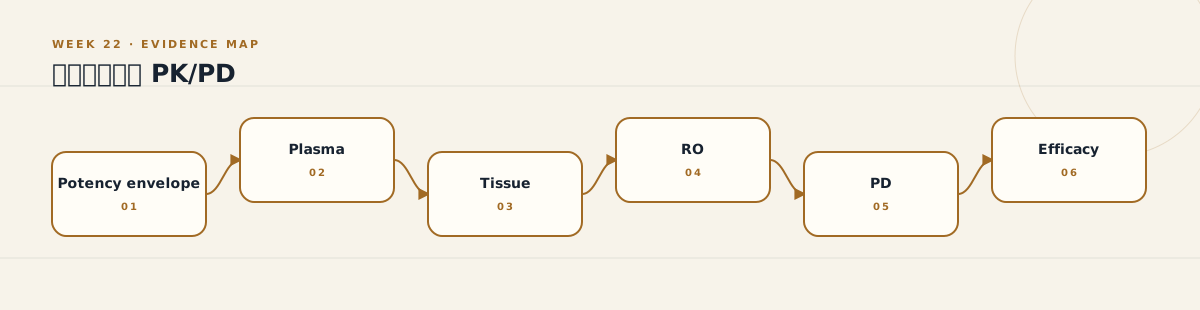
- 构建 potency→target density→exposure→RO→PD→efficacy 链;
- 用 potency envelope 代替单一 EC50;
- 正确进行 nM、µg/mL 和 mg/L 换算;
- 区分 plasma total、free/active 与 tissue concentration;
- 选择 Cmax、AUC、Ctrough 或 time-above-threshold 假设;
- 解释 target turnover、TMDD、RO 和效应时滞;
- 设计 dose/exposure/PD/efficacy 同步采样;
- 用不确定性场景给出可证伪的下一步方案。
二、学习时间安排
标准版:4 小时
| 学习块 | 时间 | 任务 | 产出 |
|---|---|---|---|
| 诊断 | 15 min | 10 题 | 盲点清单 |
| Potency envelope | 55 min | 多体系效力 | envelope table |
| 单位与 exposure | 55 min | nM↔︎µg/mL、total/free/tissue | calculation sheet |
| RO/PD/efficacy | 65 min | 链条和时滞 | study map |
| 案例与验收 | 50 min | 设计 dose-ranging | decision note |
深入版:6 小时
- 用历史数据构建 target-density × donor × E:T potency heatmap 45 分钟;
- 将 individual exposure、RO 和 tumor response 对齐 45 分钟;
- 运行三种 tissue penetration 假设的场景计算 30 分钟;
- 与 DMPK/细胞/in vivo 团队做 60 分钟 joint review。
三、课前诊断
- 体外 EC50 是体内最低有效浓度吗?
- 高表达细胞 EC90 是否比低表达 EC50 更保守?
- 1 nM 的 150 kDa IgG 是多少 µg/mL?
- Plasma total concentration 能否代表 tumor free active concentration?
- Ctrough 高于 EC90 是否保证整个肿瘤 RO 充分?
- RO 达平台后增加 dose 是否一定增加 efficacy?
- PD 与 concentration 为何可能有时间滞后?
- Tumor regression 出现在 drug 降低后,是否证明 drug 无关?
- Target turnover 如何影响给药频次?
- 场景分析和拍脑袋 safety factor 有何区别?
课前诊断参考答案(先独立作答,再展开核对)
- 不是:EC50 是特定 assay 条件(靶密度、E:T、donor、时间、基质)下的数值,条件一变就变;应构建 potency envelope,并把“体内需要多少浓度”当作待检验假设。
- 不一定可比:两者来自不同靶密度体系,不在同一曲线上,无法直接比较保守性;保守估计应来自疾病相关 target-low 条件下的完整 envelope。
- 0.15 µg/mL:按公式 µg/mL = nM × MW(kDa) / 1000 = 1 × 150 / 1000。
- 不能:中间隔着游离分数、外渗/淋巴转运、间质分布、空间穿透和靶结合 sink 等环节;对实体瘤,平均 tumor 浓度也可能掩盖外围高、核心低的异质性。
- 不保证:Ctrough 是血浆总浓度指标;空间梯度、非平衡、多价 avidity、target turnover 和可溶性靶都使肿瘤局部 RO 不同于血浆推算值。
- 不一定:占有已饱和时增加剂量只提高暴露不提高 RO;efficacy 还受 effector 功能、PD 时滞和疾病是否 target-driven 限制。
- 下游生物学更慢:细胞死亡、cytokine 级联和靶细胞耗竭等 PD 过程的起效与恢复半衰期可长于血浆药物浓度变化,形成效应时滞。
- 不证明:长效 PD(如靶细胞耗竭)可在药物清除后持续;需结合 RO/PD 时间过程与重复给药实验判断因果关系,而非仅凭时间先后。
- 新生靶稀释占有:即使一次给药达到高 RO,靶点合成/再循环会使占有下降;给药频次要平衡 drug half-life、target turnover、complex internalization 与 PD recovery。
- 假设显式化:场景分析把每个比例写成 optimistic/central/conservative,附证据来源、对决策的敏感性和最能减少不确定性的实测;拍脑袋系数隐藏假设且不可检验。
四、Potency envelope
4.1 不用单一“最佳 EC50”
至少覆盖:
| 维度 | Best-case | Typical | Challenge |
|---|---|---|---|
| Target density | high | disease-relevant mid | low |
| Effector | pre-activated | healthy donor | low-function/patient-like |
| E:T | high | expected | low |
| Matrix | simple media | serum/whole-blood relevant | inhibitory context |
| Time | long endpoint | decision-relevant | short exposure/pulse |
| Readout | sensitive reporter | direct function | durable control/regrowth |
输出不只是 EC50,还应包括 Emax、time、donor distribution、non-target activity 和 cytokine burden。
4.2 选择连接指标
根据机制选择:
- 可逆阻断:可能与 Ctrough/RO 相关;
- 峰值触发型激动/cytokine:Cmax 可能重要;
- 累积或持续杀伤:AUC、time-above-threshold 或持续 RO;
- 长效 PD:PD half-life 可能比 plasma drug 更决定频次;
- ADC:tumor delivery、payload release 和细胞更新共同决定。
这是待检验假设,不是先验事实。
五、单位换算
5.1 nM 转 µg/mL
concentration (µg/mL)
= concentration (nM) × molecular weight (kDa) / 1000
对 150 kDa IgG:
1 nM = 1 × 150 / 1000 = 0.15 µg/mL
10 nM = 1.5 µg/mL
反向:
concentration (nM)
= concentration (µg/mL) × 1000 / MW (kDa)
5.2 为什么要用实际分子量
TCE、Fab、scFv、nanobody、Fc-fusion 和 ADC 的 MW 不同。多特异错配和 DAR 也可改变平均分子量/活性分数。不要默认所有抗体都是 150 kDa。
5.3 游离/活性修正不是简单乘系数
若血浆 total drug 为 10 µg/mL,不能随意假设“10% 进肿瘤、50% active”得到 0.5 µg/mL 并当真值。应把它写成场景:
- optimistic、central、conservative;
- 每个比例的证据来源;
- 结果对决策的敏感性;
- 哪个实际测量最能减少不确定性。
六、从 plasma 到 site of action
plasma total
→ plasma free/functional
→ extravasation/lymph
→ tumor interstitium
→ spatial penetration
→ target binding/RO
→ internalization/turnover
影响 tissue exposure:
- 分子大小、charge、hydrophobicity;
- tumor perfusion/permeability;
- stromal barrier 与 interstitial pressure;
- target abundance/binding-site barrier;
- nonspecific binding;
- dose 与 schedule;
- FcRn/transcytosis;
- disease model。
Plasma 可以是 useful surrogate,但需用 tissue/RO/PD 数据校准。
七、RO 和 target turnover
7.1 简化占有关系
在极简平衡、free drug 已知且系统为 1:1 时:
Occupancy ≈ C_free / (C_free + KD)真实体内常不满足:
- 非平衡;
- avidity/多价;
- target synthesis/internalization;
- receptor reserve;
- tissue gradients;
- soluble target;
- assay perturbation。
该公式适合建立方向感,不用于替代实测 RO 或正式 TMDD model。
7.2 Turnover 与频次
即使一次给药达到高 RO,新生 target 可能使占有下降;反之长期 PD(如细胞耗竭)可在 drug 下降后持续。需要同时估计:
- drug half-life;
- target turnover;
- complex internalization;
- PD recovery;
- disease-cell growth。
八、同步实验设计
8.1 一个可解释的 dose-ranging 研究
至少包含:
- 多 dose,覆盖不足、转折和平台;
- 与体外 potency envelope 对应的 exposure;
- early/peak、trough 和 terminal PK;
- 同时点 RO/free target/proximal PD;
- tumor burden 和 individual response;
- tolerability/cytokine;
- ADA;
- 适当的 tumor/tissue concentration 或 distribution subset。
8.2 预设可证伪预测
示例:
若持续 tumor RO≥90% 是 tumor stasis 的必要条件,则达到该 RO 的剂量组应出现 stasis;若未出现,机制链在 RO→PD 或 PD→efficacy 断裂。
这样的预测比“高剂量应该更好”更有诊断价值。
九、常见断点
| 数据组合 | 可能断点 | 下一步 |
|---|---|---|
| Plasma 高,tumor/RO 低 | 分布、binding-site barrier、assay | tissue distribution/RO |
| RO 高,proximal PD 低 | target biology、receptor reserve、assay | pathway/target perturbation |
| PD 高,efficacy 低 | disease not target-driven、resistance | mechanism/combination/model |
| Efficacy 高,PK 低 | durable PD、assay 漏测、局部暴露 | PD recovery/functional assay |
| Potency 好,in vivo cytokine 高但杀伤弱 | exposure/effector/target density or window | matched killing-cytokine/RO |
| Dose↑但 exposure 不升 | TMDD 未饱和、ADA、F、assay | dose/route/ADA/bioanalysis |
十、定量场景案例
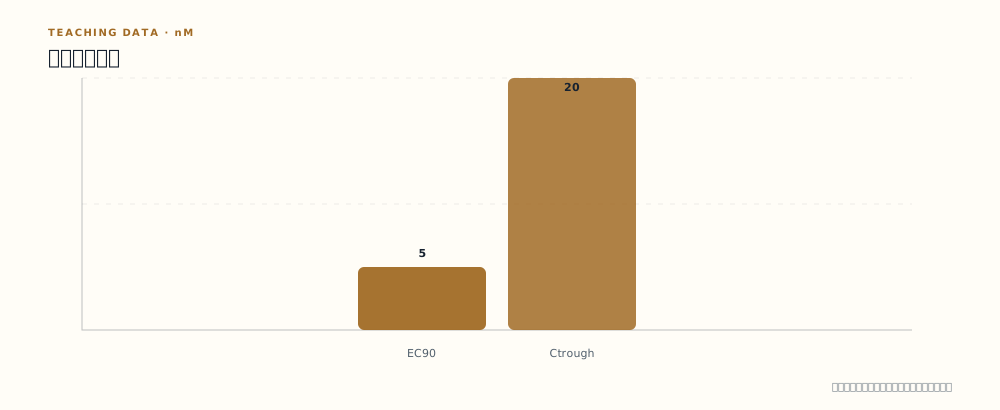
TCE-M MW=100 kDa:
- target-high killing EC90=0.2 nM;
- target-low killing EC90=5 nM;
- target-negative cytokine threshold=100 nM;
- 1 mg/kg 组 Ctrough total=2 µg/mL;
- tumor functional concentration 暂无数据。
换算:
2 µg/mL ×1000/100 = 20 nM plasma total它覆盖 target-low in vitro EC90 4 倍,但离 target-negative cytokine threshold 5 倍。不能由此宣布“有 4× efficacy margin、5× safety margin”,因为 plasma total 与 tumor active/免疫局部 exposure 不同,且 assay 条件不同。
合理下一步:测 tumor/RO/PD,建立 exposure–response;在相关血液/组织体系比较 cytokine;将 1、较低和较高剂量形成可辨识曲线。
十一、评审清单
十二、闭卷验收
- Potency envelope?
- 1 nM 150 kDa IgG?
- Plasma total 等于 tumor active 吗?
- KD 占有公式何时仅作方向感?
- Cmax/AUC/Ctrough 怎么选?
- RO 高而 PD 低说明?
- Drug 下降后 PD 持续可能为何?
- Dose range 为什么需平台?
- 场景分析要写什么?
- 好预测的特点?
闭卷验收参考答案(先闭卷作答,再展开核对)
- 效力范围:覆盖多 target density、effector、E:T、matrix、时间与 readout 条件的 potency 谱(含 Emax、donor distribution 和 non-target activity),而非单一“最佳 EC50”。
- 0.15 µg/mL:µg/mL = nM × MW(kDa) / 1000 = 1 × 150 / 1000;反向换算 nM = µg/mL × 1000 / MW(kDa)。
- 不等于:从 plasma total 到 tumor free active 需经游离分数、外渗/淋巴、间质与空间分布及靶结合等多步;plasma 只是 useful surrogate,需用 tissue/RO/PD 数据校准。
- 真实体内偏离假设时:非平衡、avidity/多价、target synthesis/internalization、receptor reserve、组织梯度、可溶性靶和 assay 扰动都破坏 1:1 平衡假设,此时该公式只提供方向感。
- 按机制与预设假设:可逆阻断看 Ctrough/RO;峰值触发的激动/cytokine 看 Cmax;累积或持续杀伤看 AUC 或 time-above-threshold;长效 PD 由 PD half-life 决定频次。
- RO→PD 断点:可能反映 target biology、receptor reserve 或 assay 问题,下一步应做 pathway/target perturbation 实验区分。
- PD 恢复更慢:靶细胞耗竭等长效 PD 的恢复半衰期长于血浆药物;turnover、complex internalization 与 disease-cell growth 共同决定效应持续时间。
- 识别非线性与饱和:覆盖不足、转折和平台的剂量范围才能区分 threshold、饱和(TMDD、effector 上限)以及“dose 升而 exposure 不升”(ADA、F、bioanalysis)的异常。
- 五个要素:每个假设的取值场景(optimistic/central/conservative)、证据来源、对决策的敏感性分析,以及哪个实际测量最能减少不确定性。
- 可证伪且对应决策:如“若持续 tumor RO≥90% 是 stasis 的必要条件,则达到该 RO 的剂量组应出现 stasis;若未出现,机制链在 RO→PD 或 PD→efficacy 断裂”——比“高剂量应该更好”更有诊断价值。
十三、本周最终交付物
提交一个项目的《Potency-to-PKPD Map》:potency envelope、单位换算、plasma/tissue 场景、RO/PD 假设、dose-ranging 设计、三条可证伪预测和 decision rules。